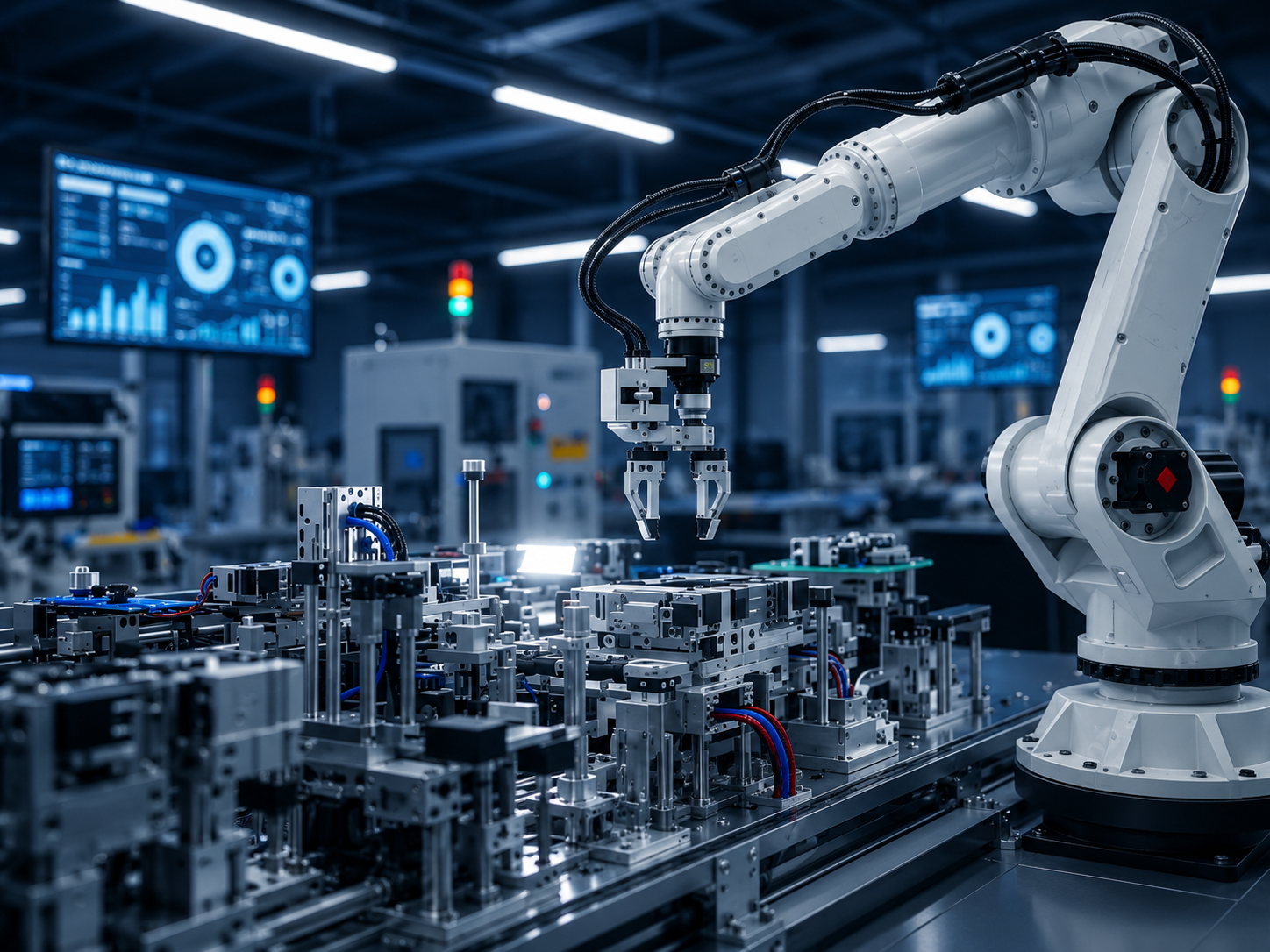
For thirty years, the logic of manufacturing was simple: make it wherever it's cheapest, ship it everywhere. That logic is now unwinding. A cascade of disruptions, pandemic shocks, geopolitical tension, shipping crises, exposed the fragility of long, cost-optimized supply chains, and manufacturers are responding by rebalancing toward resilience, proximity, and automation. It's a structural shift, and it's reshaping where and how things get made.
This piece examines the forces behind manufacturing's quiet revolution, reshoring and nearshoring, automation and Industry 4.0, and the new supply-chain calculus, and what they mean for industrial strategy.
The question driving boardrooms shifted from "where is it cheapest to make this?" to "where can we make this reliably, no matter what happens next?", and that one change is rewiring global manufacturing.
Why the offshoring logic broke
Offshoring optimized for a single variable, unit cost, and assumed stability everywhere else: predictable shipping, open trade, stable geopolitics. The last few years shattered those assumptions. When supply chains seized up, the true cost of fragility became visible: stockouts, idled production, lost revenue, and reputational damage that dwarfed the labor savings. Manufacturers learned, expensively, that resilience has value and that the lowest-cost network is not the same as the lowest-risk one.
Reshoring and nearshoring
The most visible response is geographic: bringing production closer to demand through reshoring (returning home) and nearshoring (relocating to nearby, friendlier geographies). The goal isn't to abandon cost discipline but to rebalance it against resilience, speed, and reduced geopolitical exposure. This is reshaping trade flows and creating winners among regions positioned as stable, capable alternatives to traditional manufacturing hubs.
Reshoring isn't a retreat from globalization, it's a re-pricing of risk that globalization had been ignoring.
Reshoring decisions are really risk-management decisions. The companies getting them right are quantifying the previously-ignored cost of fragility, not just chasing or fleeing low labor rates.
Automation makes proximity affordable
Here's the link most coverage misses: reshoring and automation are two sides of one coin. Making things in higher-cost geographies only pencils out if automation offsets the labor-cost gap, so the move toward proximity is driving investment in robotics, advanced automation, and smart manufacturing. Automation is what makes the new supply-chain map economically viable, which is why industrial automation and smart-manufacturing markets are growing strongly even as overall manufacturing matures.
You can't understand the reshoring trend without the automation trend. Proximity is only affordable because automation closes the labor-cost gap, they advance together.
Industry 4.0 and the smart factory
Beyond robotics, Industry 4.0, connected sensors, data, AI, and digital twins, is turning factories into intelligent, adaptive systems. Smart manufacturing improves quality, flexibility, and efficiency, and crucially provides the real-time visibility that resilient supply chains require. The manufacturers investing here aren't just cutting costs; they're building the responsiveness to detect and adapt to disruption faster than competitors, a capability that's becoming a core source of advantage.
What it means for industrial players
For industrial companies, suppliers, and investors, the implications are concrete. Capital is flowing toward automation, robotics, and smart-manufacturing technology. Supply-chain strategy is being rewritten around resilience and visibility, not just cost. Regions positioned as stable manufacturing alternatives are attracting investment. And the manufacturers that thrive will be those that understand these shifts deeply enough to place the right bets, which demands current, granular intelligence on a landscape that's changing faster than traditional industrial planning cycles.
An India example
India sits on the winning side of this rebalancing, but capturing it isn't automatic. As global firms pursue "China-plus-one" sourcing and friendlier-geography nearshoring, India is a leading candidate, backed by production-linked incentives across electronics, pharmaceuticals, and other sectors. Yet a company evaluating an Indian manufacturing base can't rely on the national headline. The real questions are local and research-driven: which industrial cluster has the supplier depth and skilled labor for this specific product, how reliable is power and logistics there, and how far can automation offset any cost gap versus the incumbent location? The macro trend says "India"; only ground-level intelligence says where in India, and whether the unit economics actually work.
Frequently asked questions
What is reshoring in manufacturing?
Bringing production back to a company's home country (or nearby, in nearshoring) to reduce supply-chain risk, geopolitical exposure, and lead times, rebalancing cost against resilience.
Why are reshoring and automation linked?
Producing in higher-cost geographies is only economical if automation offsets the labor-cost gap, so the move toward proximity is driving heavy investment in robotics and smart manufacturing.
What is Industry 4.0?
The integration of connected sensors, data, AI, and digital twins into manufacturing, turning factories into adaptive, intelligent systems with real-time visibility and greater flexibility.
Is reshoring the end of globalization?
No. It's a re-pricing of supply-chain risk, rebalancing where things are made toward resilience and proximity, rather than abandoning global trade entirely.
Which countries benefit most from reshoring and "China-plus-one"?
Stable, capable geographies with supplier depth, skilled labor, and supportive industrial policy, India, Vietnam, Mexico, and parts of Eastern Europe are common beneficiaries. But the advantage is cluster-specific, not national: whether a given location works depends on the exact product, supplier ecosystem, logistics, and how far automation offsets any cost gap.
Future outlook
Manufacturing's reorganization around resilience and automation is a multi-year structural shift, not a temporary reaction. As automation costs fall and supply-chain risk stays elevated, the rebalancing will continue, rewarding manufacturers and regions that move decisively and punishing those clinging to the old cost-only logic. The winners will treat supply-chain strategy as a living, intelligence-driven discipline.
The question for every industrial leader: is your manufacturing footprint optimized for the world that was, or the one that's arriving?
Key takeaways
- Offshoring's cost-only logic broke when supply-chain fragility proved expensive.
- Reshoring and nearshoring rebalance cost against resilience and risk.
- Automation makes proximity affordable, the two trends advance together.
- Industry 4.0 provides the visibility resilient supply chains require.
Navigating the new manufacturing landscape?
Zapulse delivers current, granular intelligence on reshoring, automation, and supply-chain shifts, so industrial leaders place the right bets.
Talk to our analystsRelated reading: The Hidden Cost of Stale Data · Manufacturing & Industrial reports
By Zapulse Research Team · Published Jun 15, 2026 · 8 min read · Manufacturing & Industrial