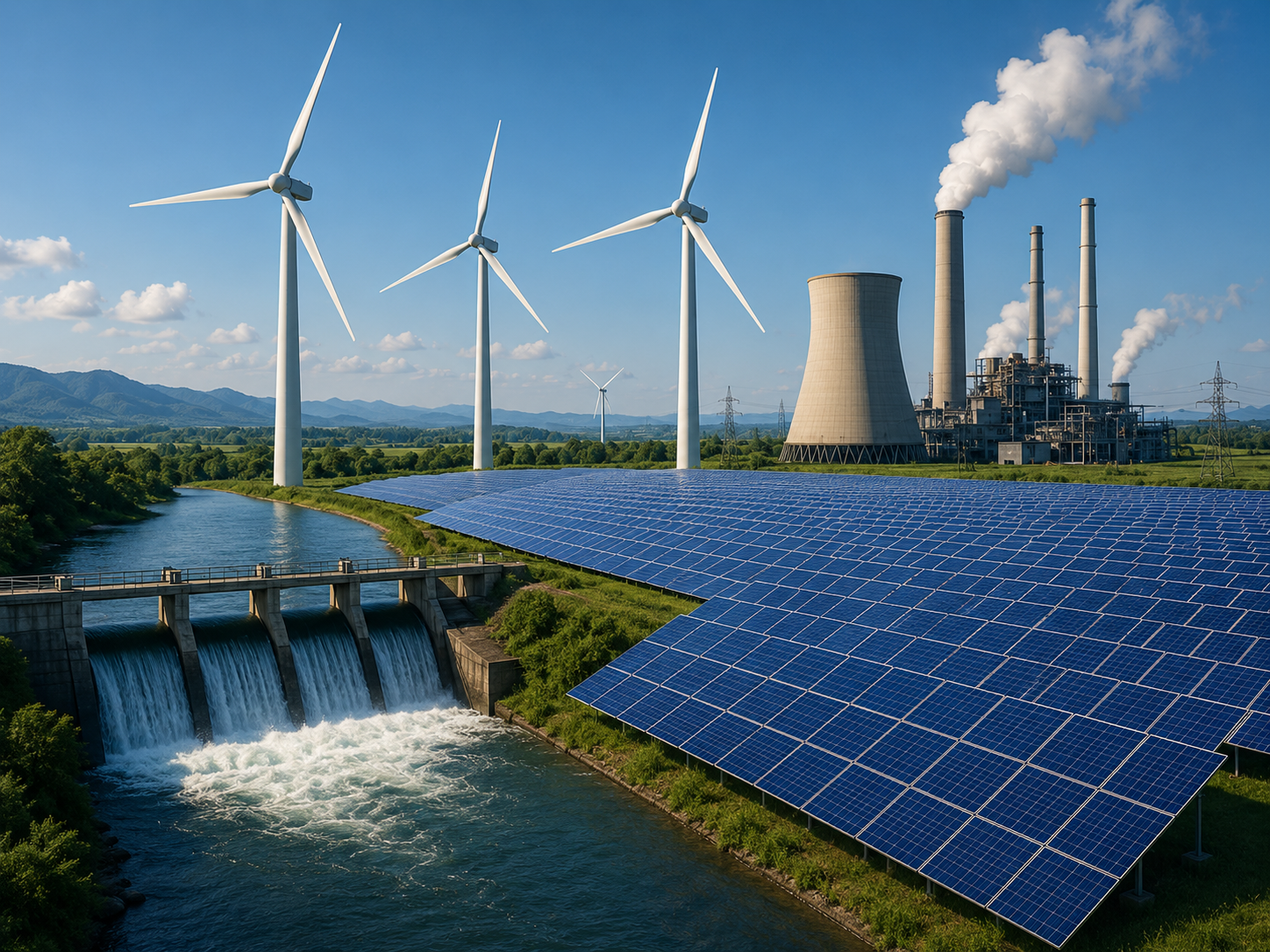
Solar panels, wind turbines, electric vehicles, grid storage, the visible symbols of the energy transition get the attention. But every one of them depends on a less visible foundation: advanced materials and chemicals. Battery chemistries, lightweight composites, specialty and green chemicals, and critical minerals are the physical substance of decarbonization, and their availability, cost, and innovation will determine how fast and how affordably the transition actually happens.
This piece looks beneath the clean-energy headlines at the materials powering the transition, where demand is surging, where the bottlenecks lie, and why materials may be the transition's true rate-limiter.
Decarbonization is, at its foundation, a materials problem. The clean-energy economy can only move as fast as the materials supply chain beneath it allows.
The transition is a materials story
Strip away the clean-energy branding and the energy transition is a massive, sustained increase in demand for specific materials, and a race to produce them affordably, sustainably, and at scale. Every gigawatt of renewable capacity and every electric vehicle represents a bill of materials that has to be sourced, processed, and manufactured. That makes the materials and chemicals sector not a footnote to the transition but one of its central enabling industries, and one of its key constraints.
Battery materials: the headline demand
The most visible materials demand comes from batteries. Cathode, anode, and electrolyte materials underpin electric vehicles and grid storage. They sit upstream of the EV battery market, itself worth an estimated US$62–91 billion in 2024 and forecast to grow at a double-digit CAGR through the early 2030s (Grand View Research, MarketsandMarkets), so battery-materials demand is being pulled up by that same steep curve. This is driving investment across the chain, mining, processing, advanced chemistries, and recycling, and turning battery-material supply into a matter of strategic and national importance.
Every EV and every grid battery is a claim on a global materials supply chain that's racing to keep up. The battery is downstream of a much harder materials problem.
Battery-material demand is the energy transition's most concentrated pressure point, which is why control of these materials and chemistries has become as strategic as control of the batteries themselves.
Lightweighting and carbon fiber
Less obvious but increasingly important are lightweight, high-strength materials like carbon fiber, essential for wind-turbine blades and for the lightweighting that improves EV range and aircraft efficiency. The carbon fiber market is growing at a healthy clip, driven substantially by clean-energy and transport applications. Materials that reduce weight or enable larger, more efficient turbines are quietly indispensable to the transition's economics.
Lightweighting materials are a hidden enabler of the transition, better blades, longer EV range, more efficient aircraft all trace back to advances in composites like carbon fiber.
Green chemicals and the sustainable shift
The transition isn't only about new energy, it's also about making the materials themselves more sustainable. Green and bio-based chemicals, which replace fossil-derived inputs with renewable ones, are growing rapidly under regulatory push (such as the EU Green Deal) and corporate sustainability commitments. This reflects a deeper truth: decarbonizing the economy means decarbonizing the chemicals and materials industries that supply it, not just the energy that powers it.
The critical-materials bottleneck
Running through all of this is a strategic concern: the supply of critical materials. Many of the minerals and processed materials the transition depends on are concentrated in a few geographies, creating supply-chain risk and geopolitical leverage. This is driving investment in localization, alternative chemistries, recycling, and supply diversification. For many players, securing materials access, not technology or capital, is the binding constraint, which is why the materials layer increasingly shapes the transition's pace.
An India example
India makes the materials-as-constraint point concrete. Its clean-energy ambitions, large solar targets, a fast-growing EV two- and three-wheeler base, and production-linked incentives for battery cells, all run into the same upstream reality: India imports most of the lithium, cobalt, and processed cathode materials those plans depend on. That's why the country is investing in critical-mineral security (overseas acquisitions, exploration, and recycling) alongside the headline clean-energy build-out. For a company betting on India's transition, the decisive question isn't demand, that's clearly there, but whether the materials and processing supply can scale to meet it, and where the choke points sit. That is a supply-chain research question, and it gates everything downstream.
Frequently asked questions
Why is the energy transition a materials problem?
Because clean-energy technologies, batteries, turbines, EVs, storage, all depend on specific advanced materials and chemicals whose availability, cost, and innovation determine how fast and affordably the transition can proceed.
What materials are most important to the energy transition?
Battery materials (cathode, anode, electrolyte), lightweight composites like carbon fiber, green and specialty chemicals, and critical minerals, each enabling a different part of the clean-energy economy.
How fast is battery materials demand growing?
It's being pulled up by the EV and grid-storage boom. The EV battery market alone, roughly US$62–91 billion in 2024 depending on the source, is forecast to grow at a double-digit CAGR through the early 2030s, and battery materials sit directly upstream of that demand.
What is the critical-materials bottleneck?
Many transition-critical minerals and processed materials are concentrated in a few geographies, creating supply risk and geopolitical leverage, often the binding constraint on the transition's pace.
Why is critical-material supply a strategic issue for countries like India?
Because national clean-energy and EV ambitions depend on minerals and processed materials that are often imported and geographically concentrated. Securing that supply, through exploration, overseas acquisition, alternative chemistries, and recycling, becomes as strategically important as the clean-energy build-out itself, since it gates how fast that build-out can actually proceed.
Future outlook
As the energy transition accelerates, demand for its enabling materials will intensify, and the materials and chemicals sector will sit ever closer to the strategic center of the clean-energy economy. The constraints, supply concentration, cost, sustainability of production, will increasingly determine the transition's pace. The players that thrive will be those who understand the materials landscape deeply enough to anticipate the bottlenecks and position ahead of them.
The question for everyone betting on the energy transition: are you watching the clean-energy headlines, or the materials supply chain that will actually decide how fast it happens?
Key takeaways
- The energy transition is, at its foundation, a materials problem.
- Battery materials are the most concentrated demand pressure point, pulled up by a double-digit-growth EV battery market.
- Carbon fiber and lightweighting are hidden enablers.
- Green chemicals and critical-material supply shape sustainability and pace.
Tracking the materials behind the transition?
Zapulse delivers intelligence on battery materials, advanced composites, green chemicals, and critical-material supply chains, so you anticipate the bottlenecks.
Talk to our analystsRelated reading: The EV Inflection Point · Chemicals & Materials reports
Sources
- Grand View Research, Electric Vehicle Battery Market (US$61.3B in 2024, 22.2% CAGR to 2030) www.grandviewresearch.com/industry-analysis/electric-vehicle-battery-market
- MarketsandMarkets, EV Battery Market (US$91.9B in 2024 to US$251.3B by 2035) www.marketsandmarkets.com/Market-Reports/electric-vehicle-battery-market-100188347.html
By Zapulse Research Team · Published Jun 15, 2026 · 7 min read · Chemicals & Materials